
A minute repeater is one of the few watch complications that photographs can never explain properly. You can study the finishing, the case and the dial for as long as you like, but the most important part only reveals itself when the slide is activated and the watch begins to chime the time.
That is what makes Audemars Piguet’s latest Supersonnerie releases more interesting than a routine collection update. The brand has introduced two Royal Oak Minute Repeater Supersonnerie models alongside a new Code 11.59 version. All three use the same hand wound Calibre 2953, yet the choice of titanium, pink gold or white gold gives each watch a noticeably different character.
On paper, the changes appear straightforward. One Royal Oak combines titanium with a smoked green dial, another pairs pink gold with a brown Grande Tapisserie dial, while the Code 11.59 uses white gold and a smoked sapphire display. The important difference is that a minute repeater is not simply a movement placed inside a decorative case. The case itself forms part of the acoustic environment, which makes material and construction more relevant than they would be on an ordinary three hand watch.
For readers following complicated watch design through Hot Watches Sale, this is exactly the kind of release that deserves more than a specification list. With a Supersonnerie, what happens beneath the dial and what reaches the ear matter just as much as the appearance of the watch.
Why Supersonnerie Still Matters
Audemars Piguet developed the Supersonnerie system to address one of the long standing weaknesses of traditional minute repeaters. A chiming movement can be beautifully constructed and still sound relatively muted because much of the vibration disappears into the movement and case before reaching the outside world.
The Supersonnerie architecture takes a different approach. The gongs are connected to a dedicated soundboard designed to transmit their vibration more effectively. The principle is similar to the resonating surface of a musical instrument. The mechanism still creates the sound, but the surrounding structure determines how clearly that sound is carried.
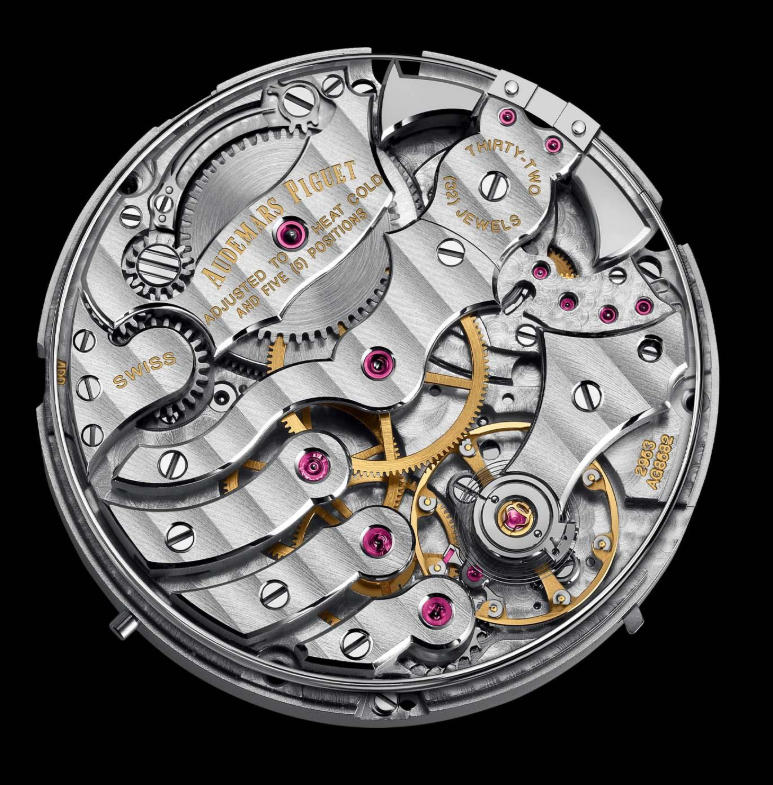
Audemars Piguet also worked on reducing the background noise created by the regulator controlling the chiming sequence. That matters because a convincing minute repeater is not simply about volume. The hours, quarter hours and minutes need to remain distinct, while the machinery operating behind them should stay as unobtrusive as possible.
This is what gives the Audemars Piguet Supersonnerie minute repeater system its real significance. It is not simply another complication added to a familiar case. The movement, the way sound is produced and the way the case transmits that sound have been considered as one system.
All three new watches use Calibre 2953, a manually wound movement made from 362 components with around 72 hours of power reserve. It runs at 21,600 vibrations per hour and is activated through the slide on the side of the case.
The specifications are shared. The watches themselves are not.
The titanium Royal Oak is probably the easiest of the three to understand immediately. Its 42mm case retains the familiar octagonal bezel and integrated bracelet, but titanium changes how such a substantial watch feels on the wrist.
At 14mm thick, it still has considerable presence. The lighter metal, however, takes some of the physical weight out of the design and suits the technical nature of the complication particularly well.
The smoked green dial is equally well judged. Its sunburst surface darkens toward the outer edge and keeps the display relatively restrained, with a small seconds register at six o’clock. On a watch with this much happening mechanically underneath the dial, that simplicity is welcome.
The combination of a 42mm titanium Royal Oak with a smoked green dial feels modern without becoming overly dramatic. The case and bracelet provide the industrial character, while the green adds enough warmth to prevent the watch from looking clinical.
The pink gold Royal Oak approaches the same movement from almost the opposite direction.

Its proportions are similar, but an entire case and integrated bracelet in 18 carat pink gold make it feel much heavier and richer. The brown Grande Tapisserie dial reinforces that warmth while preserving the texture that immediately identifies the watch as a Royal Oak.
That dial matters more than it might first appear. Brown and pink gold can easily become too soft or too luxurious when used together, but the geometric Tapisserie pattern gives the surface enough structure to balance the colour of the metal.
The contrast between the two Royal Oaks therefore goes much further than green versus brown. Titanium makes one feel lighter, cooler and more technical. Pink gold makes the other feel denser, warmer and more traditional.
On a conventional watch, that might simply be a matter of personal taste. On a minute repeater, the difference is more interesting because the case material also surrounds the acoustic mechanism.
This is one reason I would not choose between the two from photographs alone. A watch built around sound deserves to be heard before its character is fully judged.
Readers comparing these references with other Royal Oak and Code 11.59 models can find them together in our Audemars Piguet watch coverage. Viewed alongside simpler pieces from the same collections, the differences in architecture become much easier to appreciate.
The Code 11.59 Minute Repeater Supersonnerie takes the same Calibre 2953 and presents it in a more visually open way.

Its 41mm white gold case is slightly smaller than the Royal Oaks, but the smoked sapphire dial is the detail that really changes the watch. Instead of hiding most of the movement beneath an opaque surface, the dial allows the architecture underneath to become part of the display.
That suits the Code 11.59 particularly well. The collection has always depended on depth, layered construction and the relationship between its crystal and case rather than on an instantly recognisable bracelet or bezel. The transparent quality of the dial adds another layer without making the front of the watch feel unnecessarily busy.
The polished white gold case and grey alligator strap also move it away from the stronger sports watch language of the Royal Oak.
The white gold Code 11.59 Minute Repeater Supersonnerie is quieter at first glance, yet more revealing when viewed closely. There is no octagonal bezel or integrated bracelet carrying the design. The movement itself becomes far more important visually.
Three Very Different Ways to Present the Same Movement
The easiest mistake with these watches is to describe them as three colour and material variations built around the same calibre.
Technically that is true, but it misses what makes the release interesting.
Titanium gives the Royal Oak a lighter and more contemporary personality. Pink gold turns the same basic architecture into something much more physical and luxurious. White gold on the Code 11.59 appears relatively discreet, but the smoked sapphire dial exposes more of the mechanics than either Royal Oak.
The relatively modest 20 metre water resistance also makes sense in that context. These are not sports watches in the practical sense, even if two of them wear the Royal Oak shape. Their engineering priorities are elsewhere.
The Calibre 2953 with a 72 hour power reserve is built around a traditional complication interpreted through modern acoustic thinking. It still needs to be wound manually, and that is part of the experience rather than an inconvenience to be engineered away.
You wind the watch, set the time and activate the slide. A mechanical sequence then tells you the time acoustically, despite the fact that almost any electronic device could provide the same information more quickly and more accurately.
That lack of necessity is exactly why the complication remains fascinating.
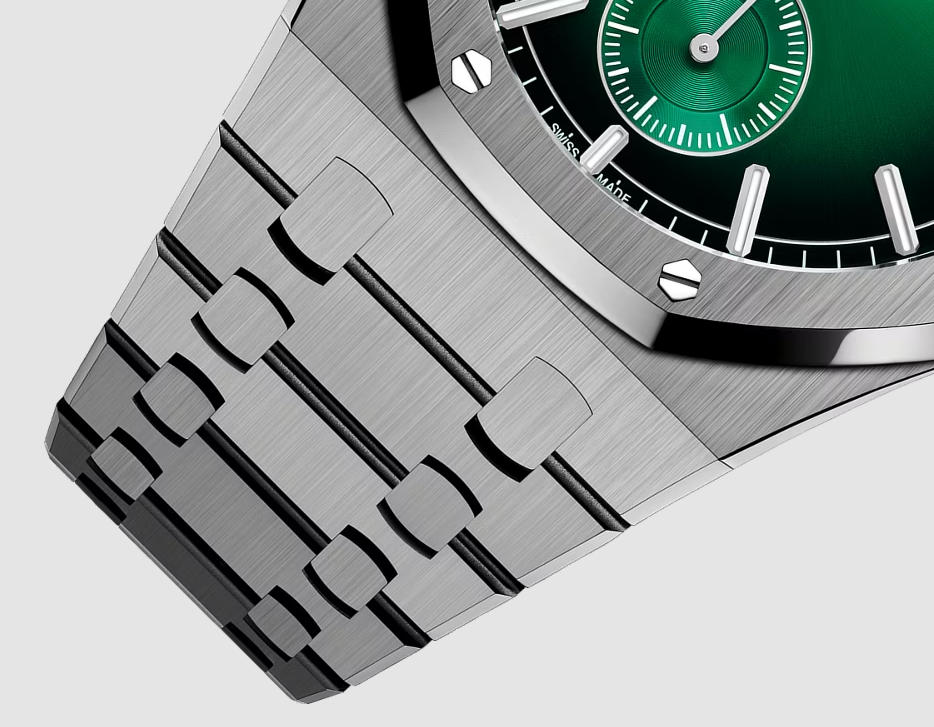
The titanium Royal Oak is the one I find easiest to imagine wearing. The lighter construction suits a 42mm case, and the green dial adds character without competing with the movement.
The pink gold version is much less restrained. Its weight and colour are part of the appeal, and it makes no attempt to disguise its presence.
The Code 11.59 may be the most interesting one to study closely. White gold keeps the exterior relatively quiet while the sapphire dial shifts attention toward the movement itself.
None of the three feels like an obvious winner because each uses the same complication to create a different experience.
More importantly, Audemars Piguet has resisted the temptation to make these watches visually complicated simply because the movement is mechanically complicated. There is no unnecessary chronograph, no overloaded dial and no attempt to turn the minute repeater into one feature among many.
The chime remains the reason the watches exist.
That is the part worth remembering when looking at high complication Audemars Piguet watch design. A normal watch can often be understood through its dial, case and bracelet. A Supersonnerie cannot. Those details only tell part of the story.
The rest is sound.
If I had to choose from photographs alone, I would probably take the titanium Royal Oak. The green dial works naturally with the cooler case material, and the lighter construction feels right for a watch carrying this much mechanical complexity.
But choosing a minute repeater without hearing it is rather like choosing a loudspeaker by looking only at the cabinet.
The real character of the watch begins when the slide is pushed.